Difference between Alta Langa and Champagne
Alta Langa vs Champagne: Two Excellence Wines Compared
A comparison of terroir, production method, and style
Comparing Alta Langa DOCG and Champagne AOC means delving into the heart of the world’s sparkling wine scene, where technique, terroir, and winemaking vision come together to create wines of the highest quality.
On one side, Champagne, a global symbol of prestige, born in the cool lands of northeastern France and built on centuries of history, recognition, and international positioning.
On the other, Alta Langa DOCG, a more recent yet highly ambitious expression of Piedmont, which has chosen to focus exclusively on the Traditional Method in order to establish itself among the world’s great sparkling wines.
What these two appellations have in common is much more than one might imagine:
- the use of the same noble grape varieties: Pinot Noir and Chardonnay
- secondary fermentation in the bottle according to the Traditional Method
- extended ageing on the lees
- a constant pursuit of finesse, complexity, and elegance
And yet, despite these shared foundations, Alta Langa and Champagne are not interchangeable.
Each glass tells a distinct story, deeply rooted in the identity of its place of origin.
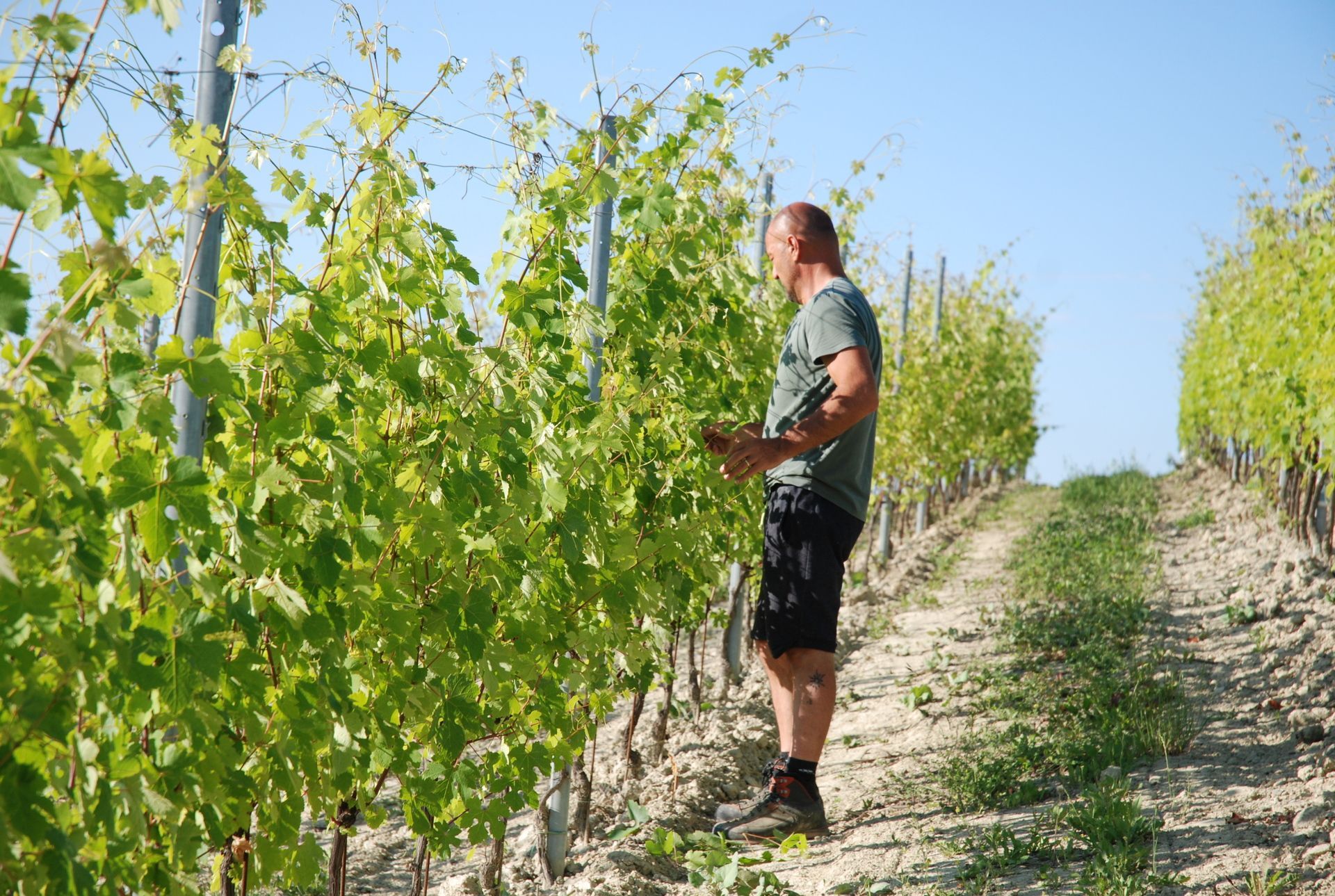
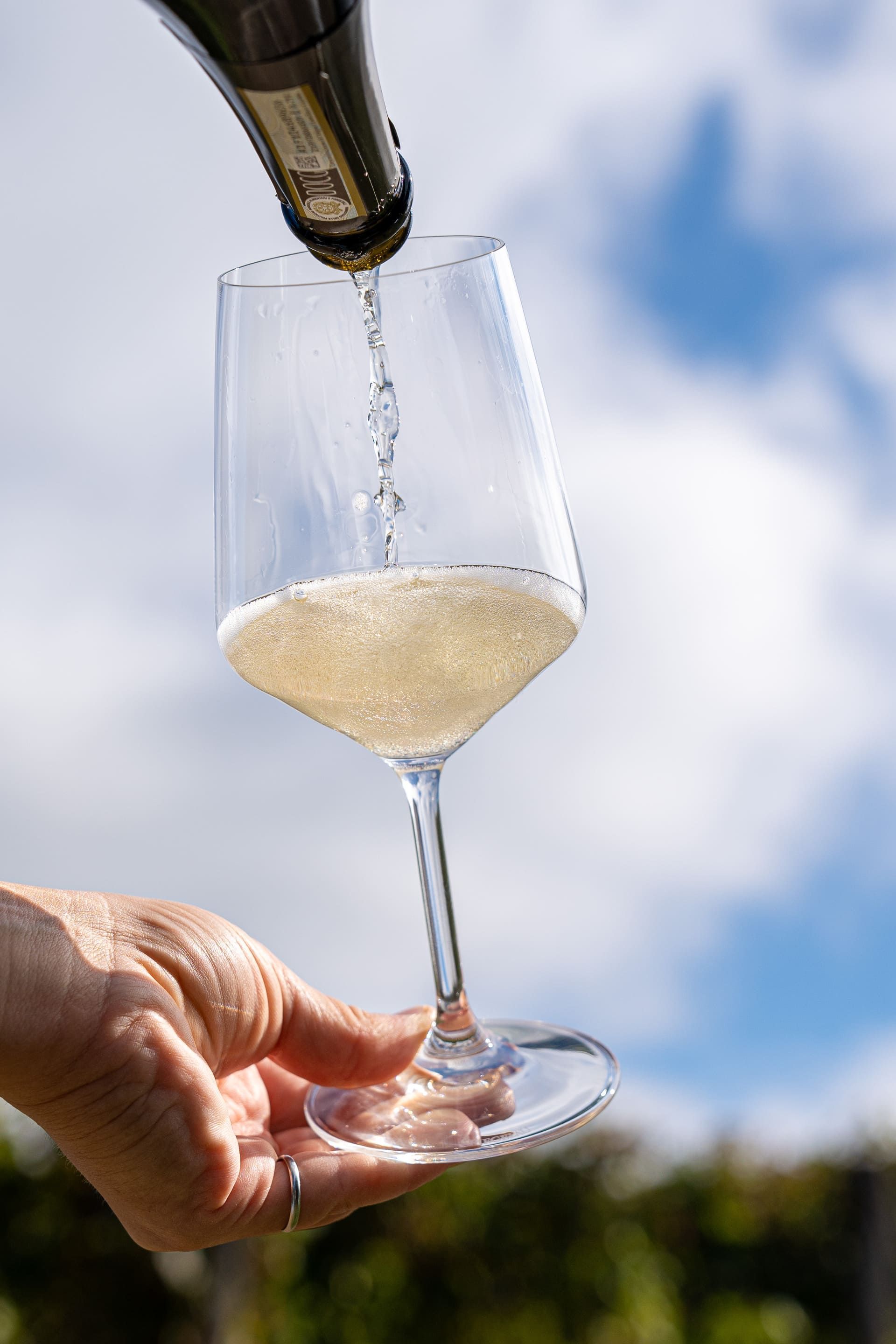
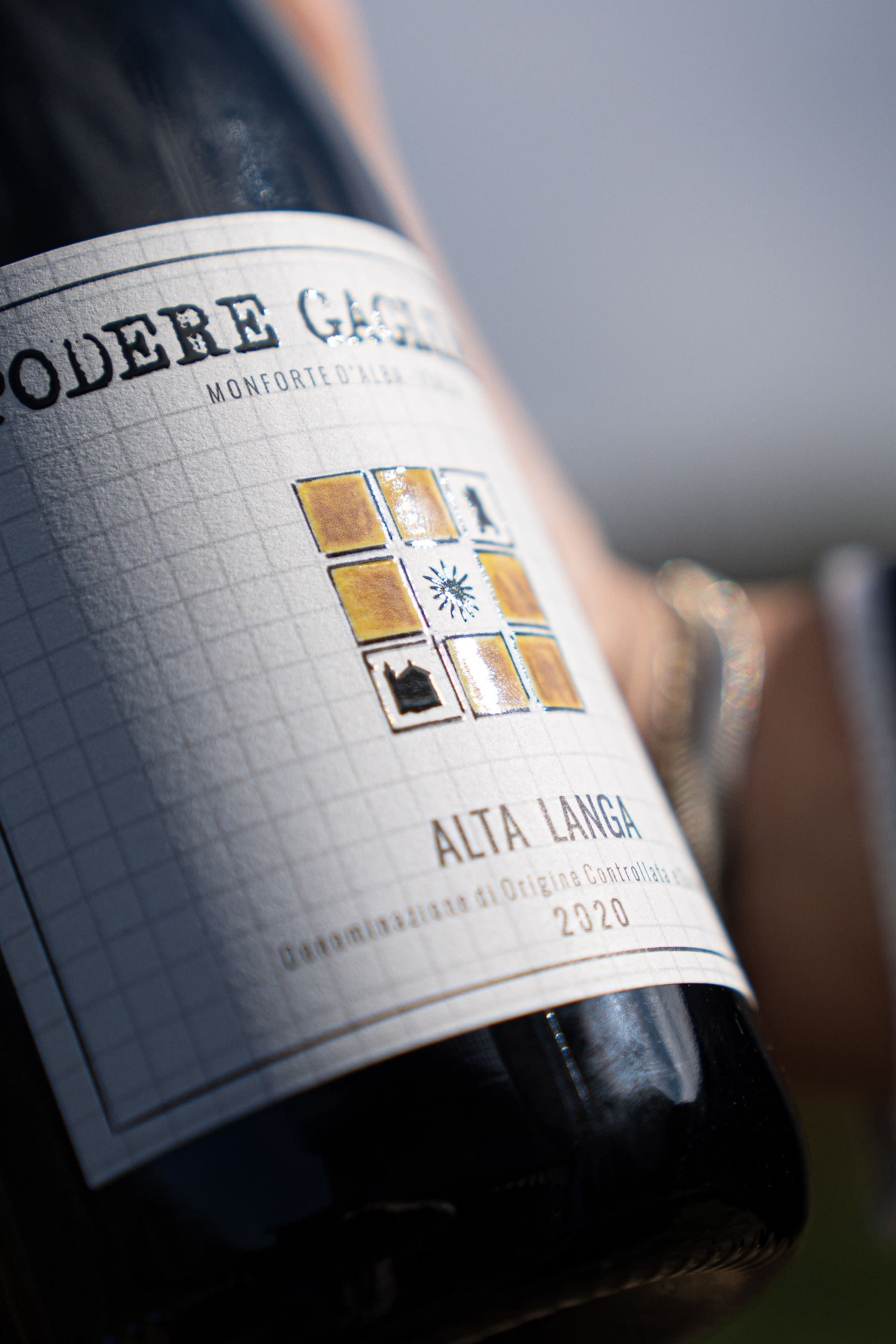
Alta Langa DOCG Podere Gagliassi, for example, interprets the Traditional Method through the lens of the Langhe, with vineyards located at approximately 480 metres above sea level and cultivated using certified organic practices. Here, soil minerality and significant temperature variations between day and night help shape a style that is more vertical, focused, and expressive of its terroir.
Champagne, on the other hand, tends to express greater roundness and aromatic depth, the result of a harsher climate and a long-standing tradition of creating complex blends from different parcels and vintages.
The comparison, therefore, is not a competition, but a dialogue between two distinct visions:
- one international and deeply rooted in history
- one emerging, distinctive, and deeply connected to the Italian terroir
Understanding these differences means not only choosing what to drink, but truly
appreciating what you are tasting.
Terroir: Langhe vs. Champagne
If the Traditional Method represents the technique, it is the terroir that defines the soul of the wine.
And it is precisely here that the difference between Alta Langa DOCG and Champagne becomes most evident and distinctive.
Champagne: Cool Climate and Chalky Soils
The
Champagne region, located in northeastern France, is characterized by
a cool continental climate with oceanic influences.
Lower temperatures and reduced sunlight slow down grape ripening, promoting:
- high natural acidity
- more focused and delicate aromatic profiles
- excellent ageing potential
The soils are predominantly limestone and chalk, with excellent drainage and light-reflecting properties that contribute to the wines’ distinctive mineral and saline character.
Alta Langa: altitude, light and minerality
Alta Langa DOCG, on the other hand, is found among the higher hills of Piedmont, in a completely different yet equally favourable terroir.
Nel caso dell’Alta Langa DOCG Podere Gagliassi, i vigneti si trovano a circa 480 metri s.l.m., in una posizione che garantisce:
- significant temperature variations between day and night
- excellent sun exposure
- slow but complete ripening
The soils are calcareous-marly, rich in mineral elements, and capable of giving the wine a broader structure and a more pronounced, deeper mineral character.
Furthermore, certified organic farming helps preserve the vineyard’s natural balance, further enhancing the connection between the wine and its terroir.
Two terroirs, two identities
If Champagne expresses elegance through finesse and precision, Alta Langa — and particularly the wines crafted by Podere Gagliassi — stands out for its more sun-kissed verticality, broader structure, and distinctive sense of place.
The goal is not to determine which is superior, but to understand how:
- il climate
- il soil
- l’altitude
shape two different interpretations of the same winemaking method.
Traditional Method: Similarities and Differences
Both Alta Langa DOCG and Champagne share the same production method: the Traditional Method, also known as secondary fermentation in the bottle.
It is this process that creates the bubbles, giving rise to the fine, persistent perlage that characterizes both appellations.
The main stages are the same:
- production of the base wine
- creation of the cuvée
- addition of yeast and secondary fermentation in the bottle
- ageing on the lees
- remuage and disgorgement
- optional final dosage
However, it is in the interpretation of these stages that substantial differences emerge.
Ageing Top
One of the key elements is time.
- In Champagne,regulations require:
- a minimum of 15 months for non-vintage wines
- a minimum of 36 months for vintage wines
- In Alta Langa DOCG, on the other hand:
- a minimum of 30 months on the lees
- all bottles are vintage-dated by regulation
This means that Alta Langa is born with a high-quality approach, without “entry-level” versions.
In the case of Alta Langa DOCG Podere Gagliassi, ageing is extended to 36 months, a choice that allows greater aromatic complexity to develop, together with a creamier texture and finer perlage.
Production Philosophy
Champagne is historically based on the art of blending, often combining:
- different vintages
- different parcels
- different grape varieties
The aim is to achieve a consistent and recognizable style over time.
Alta Langa, on the other hand, being always vintage-dated, tends to highlight:
- the specific vintage
- the climatic conditions of that particular year
- the identity of the individual terroir
In the case of Podere Gagliassi, the decision to work with single-block vineyards further strengthens this identity, offering a more coherent and terroir-driven expression of the Traditional Method.
Precision vs. Identity
We can summarize it as follows:
- Champagne → stylistic precision, continuity, the signature of the Maison
- Alta Langa DOCG → sense of place, vintage character, expression of the vineyard
Both follow the same method, but with two different visions:
- one focused on consistency over time
- the other on
showcasing the individual vintage and the terroir.
Grape Varieties: Pinot Noir and Chardonnay Compared
Both Alta Langa DOCG and Champagne share a common grape-variety base: the key protagonists are Pinot Noir and Chardonnay, two international varieties that find ideal conditions in both regions to express themselves at the highest level.
However, it is precisely the interaction between grape variety and environment that produces profoundly different results in the glass.
Pinot Noir: Structure and Depth
Pinot Noir is the grape variety that contributes:
- structure
- body
- aromatic depth
In Champagne, thanks to the cooler climate, Pinot Noir tends to express itself with:
- greater finesse
- more delicate and spicy notes
- an elegant yet more restrained structure
In the Alta Langa DOCG Extra Brut by Podere Gagliassi, grown at approximately 480 metres above sea level, it develops:
- more complete ripeness
- greater aromatic intensity
- a broader, more enveloping structure
Chardonnay: Freshness and Elegance
Chardonnay is responsible for:
- acidity
- finesse
- ageing potential
In Champagne, it expresses itself through:
- citrus and chalky notes
- great tension and verticality
In Alta Langa, on the other hand, it takes on a more:
- sun-kissed and ripe character
- with aromas of white-fleshed fruit
- while maintaining vibrant freshness
In the case of Alta Langa DOCG Podere Gagliassi, cultivated using certified organic practices, it contributes to an authentic and well-defined minerality.
Blanc de Blancs and Blanc de Noirs: What Do They Mean?
In the world of Traditional Method sparkling wines, there are two fundamental definitions that help explain a wine’s style:
- Blanc de Blancs: a sparkling wine made exclusively from white grapes, therefore
100% Chardonnay
→ finer, more vertical, elegant, and fresher - Blanc de Noirs: a sparkling wine made from black grapes vinified as a white wine, therefore 100% Pinot Noir → more structured, intense, and complex
These styles are particularly widespread in Champagne, where they represent distinctive expressions of the region.
In Alta Langa DOCG, on the other hand, it is very common — as in the case of Podere Gagliassi — to work with a balanced cuvée of Pinot Noir and Chardonnay, creating a wine that combines:
- structure and tension
- body and freshness
- complexity and harmony
Balance in the Cuvée
The Alta Langa DOCG Extra Brut by Podere Gagliassi is based on a perfect balance: 50% Pinot Noir and 50% Chardonnay, a choice that reflects the desire to express the territory in a complete and harmonious way.
In Champagne, on the other hand, proportions can vary considerably, giving rise to a wide range of interpretations.
Same DNA, Different Expressions
Although they start with the same grape varieties, the final result can be profoundly different
- Champagne → sharper, more delicate, more layered
- Alta Langa DOCG → more textural, vertical, and terroir-driven
This is where the true value of wine emerges: in its ability to transform the same grapes into completely different experiences.
Style and Taste Profile: What Changes in the Glass
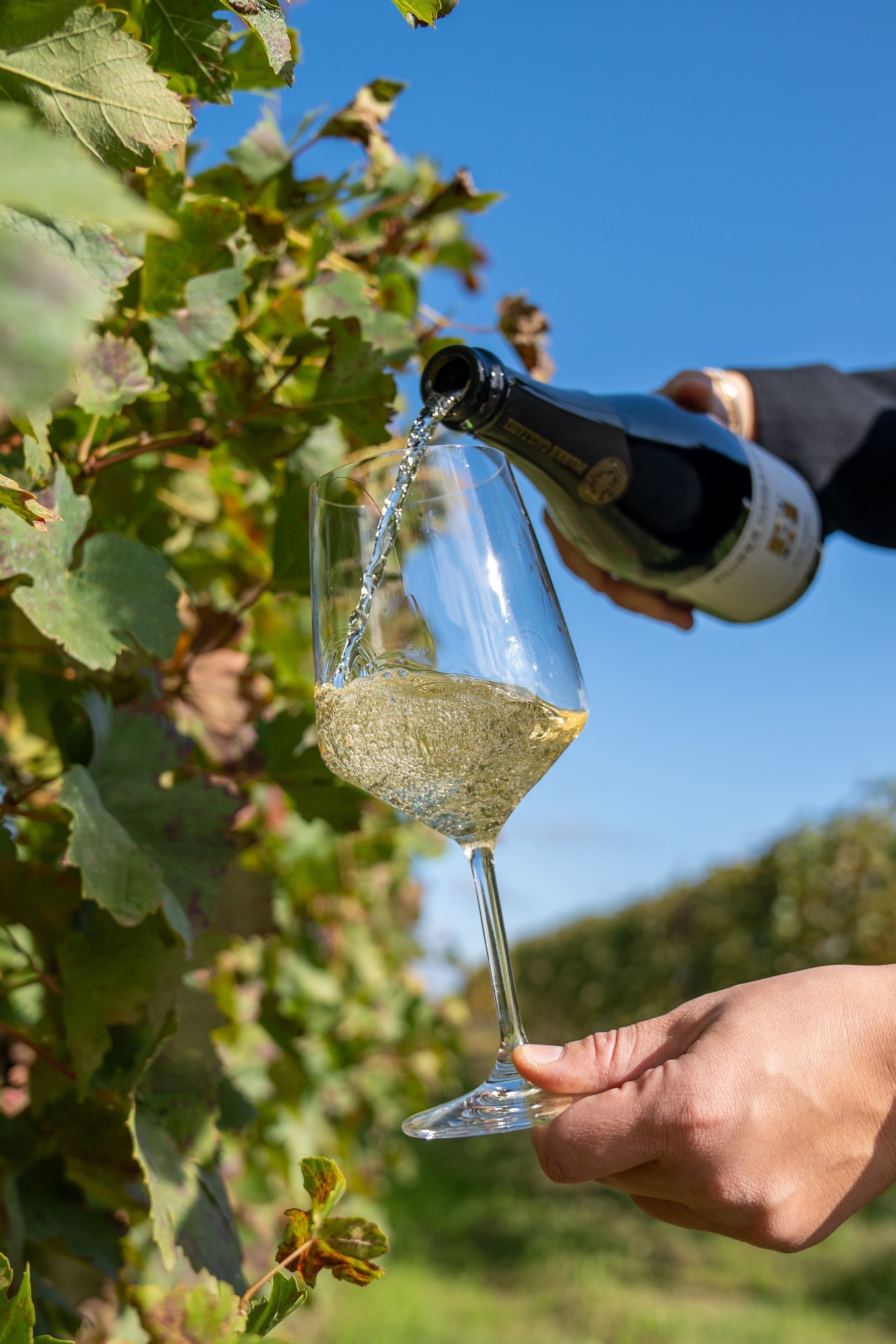
After analysing terroir, production method, and grape varieties, it is in the glass that the difference between Alta Langa DOCG and Champagne becomes most direct and perceptible.
Both represent the excellence of the Traditional Method, but their taste profiles reveal two distinct interpretations of the same winemaking language.
Champagne: Finesse, Complexity, and Layers
Champagne generally stands out for a style that is more:
- refined and layered
- marked by aromas that evolve over time
- characterized by great aromatic precision
On the nose, it often reveals:
- citrus and white flowers
- notes of bread crust, hazelnut, and butter
- mineral nuances associated with chalky soils
On the palate, it is:
- creamy
- balanced
- long and harmonious
Its strength lies in its ability to offer a progressive and complex experience that slowly unfolds in the glass.
Alta Langa DOCG: Verticality, Energy, and Sense of Place
Alta Langa DOCG, and particularly Alta Langa DOCG Extra Brut, stands out for a more:
- direct and vertical approach
- strong connection to its terroir
- vibrant freshness
Its aromatic profile develops around:
- yellow flowers
- white-fleshed fruit
- delicate notes of yeast and bread crust
On the palate, it reveals:
- pronounced freshness
- evident mineral tension
- an elegant yet more dynamic and linear structure
The perlage is fine and persistent, but often less enveloping than in some expressions of Champagne, precisely because it prioritizes greater verticality and drinkability.
Two Styles, Two Experiences
The comparison can be summarized as follows:
- Champagne → more complex, layered, and rounded
- Alta Langa DOCG → more focused, fresh, and terroir-driven
Champagne tends to offer a more contemplative experience, while Alta Langa DOCG Podere Gagliassi focuses on elegant drinkability, combining technical precision with immediacy
A Matter of Interpretation
The goal is not to determine which is better, but to understand which style best suits the moment:
- looking for complexity and depth that evolves over time → Champagne
- looking for freshness, identity, and dynamism → Alta Langa
Both speak the language of the Traditional Method, but with
completely different accents.
Price and Positioning: Is Alta Langa an Alternative to Champagne?
When discussing Alta Langa DOCG vs. Champagne, one of the most relevant aspects for consumers is the balance between quality and price.
Champagne has long been associated with an established image of luxury, built on:
- centuries of history
- strong recognition of its regional identity
- international positioning strategies
This is reflected in a generally higher price, influenced not only by the quality of the product but also by the value associated with the “Champagne” name
Alta Langa DOCG: Accessible Excellence
Alta Langa DOCG occupies a very high-quality segment, while maintaining a more accessible and competitive positioning.
It is a sparkling wine that:
- uses the same Traditional Method
- requires extended ageing — a minimum of 30 months
- is always vintage-dated
- is made from noble grape varieties such as Pinot Noir and Chardonnay
Yet it can often be found on the market at a lower price than many Champagne labels.
This makes Alta Langa a particularly interesting choice for those looking for:
- high technical quality
- a strong sense of place
- a premium experience without the additional cost associated with brand prestige
The Alta Langa DOCG Extra Brut Podere Gagliassi
Alta Langa DOCG Podere Gagliassi perfectly represents this positioning.
With an annual production limited to 10,000 bottles, sourced from certified organic single-block vineyards located at 480 metres above sea level, and aged for 36 months on the lees, it offers an exceptionally high level of quality.
In this case, value is not determined by a global brand, but by:
- precise viticultural choices
- artisanal winemaking
- a strong connection to the territory
.The result is a Traditional Method sparkling wine that competes on quality while standing out for its authenticity and distinctive identity.
Alternative or Conscious Choice?
Defining Alta Langa as an “alternative to Champagne” is reductive.
More accurately, it is a conscious choice:
- Champagne → a global symbol with an established style
- Alta Langa DOCG → a terroir-driven expression with an emerging identity
Choosing an Alta Langa DOCG Podere Gagliassi means opting for:
- craftsmanship
- terroir
- an exceptionally competitive quality-to-price ratio
A New Perspective on the Traditional Method
Today, Alta Langa is no longer simply an alternative, but an appellation increasingly establishing itself as a leading player in the world of great sparkling wines.
For those who know wine, it is often a discovery. For those who choose it, it becomes a conscious preference.
Alta Langa DOCG Extra Brut: An Italian Expression of the Traditional Method
In any comparison between great appellations, it is essential not to lose sight of what truly makes a wine memorable: its identity.
Alta Langa DOCG Podere Gagliassi is born from a clear vision: to interpret the Traditional Method through the authentic character of the Langhe, enhancing every element of the territory without compromise.
From the very beginning, Podere Gagliassi believed in the Alta Langa project, becoming one of the first producers to join in 2018, with the aim of creating a sparkling wine capable of combining technical precision with a strong sense of place.
Discover more:
Alta Langa DOCG Traditional Method Sparkling Wine: the excellence of the Langhe in a bottle
Vineyard, Altitude, and Organic Farming
Everything starts in the vineyard:
- a single-block vineyard in the municipality of Monforte d’Alba
- an altitude of approximately 480 metres above sea level
- certified organic farming
These conditions make it possible to obtain grapes with:
- high natural acidity
- balanced ripening
- strong mineral expression
An ideal setting for producing a Traditional Method sparkling wine of remarkable precision.
A Cuvée That Expresses Balance
Alta Langa DOCG Podere Gagliassi is made from a 50% Pinot Noir and 50% Chardonnay cuvée, a choice that reflects the desire to create a wine that is:
- structured yet elegant
- fresh yet deep
- complex yet immediately approachable
The balance between the two grape varieties is designed to express the characteristics of the terroir at their best, without forcing them.
The Value of Time
Time is one of the most important ingredients.
With at least 36 months of ageing on the lees, each bottle develops:
- greater aromatic complexity
- finer, more refined perlage
- a more harmonious and persistent structure
Production is deliberately limited to 10,000 bottles per year in order to maintain a high level of quality control and preserve the wine’s identity.
A Traditional Method Sparkling Wine That Speaks Italian
Alta Langa DOCG Podere Gagliassi does not seek to imitate Champagne, but to offer its own interpretation of the Traditional Method
- more terroir-driven
- more vertical
- deeply connected to the minerality of the Langhe
It is a wine born from a clear philosophy: to highlight what makes its place of origin unique, without pursuing external models.
The Choice for Those Who Seek Authenticity
Choosing Alta Langa DOCG Podere Gagliassi means:
- discovering an emerging yet already highly qualified producer
- supporting artisanal and organic production
- experiencing a wine culture that places the territory at its heart
It is not simply an alternative to Champagne, but a
choice of identity — for those who seek something more from wine than just a toast.
FAQ – Alta Langa vs Champagne
What is the difference between Alta Langa and Champagne?
The main difference lies in the terroir, climate, and style.
Champagne comes from France, with a cooler climate and a more complex, layered style, while Alta Langa DOCG is Italian, more vertical, fresh, and terroir-driven.
Alta Langa or Champagne: Which One Should You Choose?
It depends on the occasion:
Champagne → formal occasions and prestige
Alta Langa → an authentic experience, quality, and better value for money
Can Alta Langa Be Compared to Champagne?
Yes, it uses the same Traditional Method and grape varieties, but expresses a different style, more closely connected to the Langhe terroir.
Why Does Alta Langa Cost Less Than Champagne?
The lower price is due to less established branding and commercial history, not to lower quality, which can be very high.
Is Alta Langa Always Vintage-Dated?
Yes. Under the appellation regulations, all bottles must indicate the specific vintage.
Condividi articolo
Potrebbe interessarti anche: