The Three Barolo Designations: Classic, Commune, and Cru
Barolo Is More Than Just a Single Wine
Behind the name “Barolo” lies a diverse range of territorial expressions, each reflecting the character of the Langhe through subtle yet distinctive nuances. Understanding the difference between a Classic Barolo, a Commune Barolo, and a Cru Barolo is key to appreciating the true soul of this iconic wine.
Just as in
Burgundy, where villages and climats express distinct identities,
Barolo also reveals different personalities depending on the origin of its grapes. Some
Barolos are produced from a blend of vineyards across the
entire appellation, others represent a
single commune, while the most distinctive expressions come from a
single historic cru.
At Podere Gagliassi, we have chosen to showcase all three of these expressions through three distinct wines, each reflecting its own production philosophy and territorial identity.
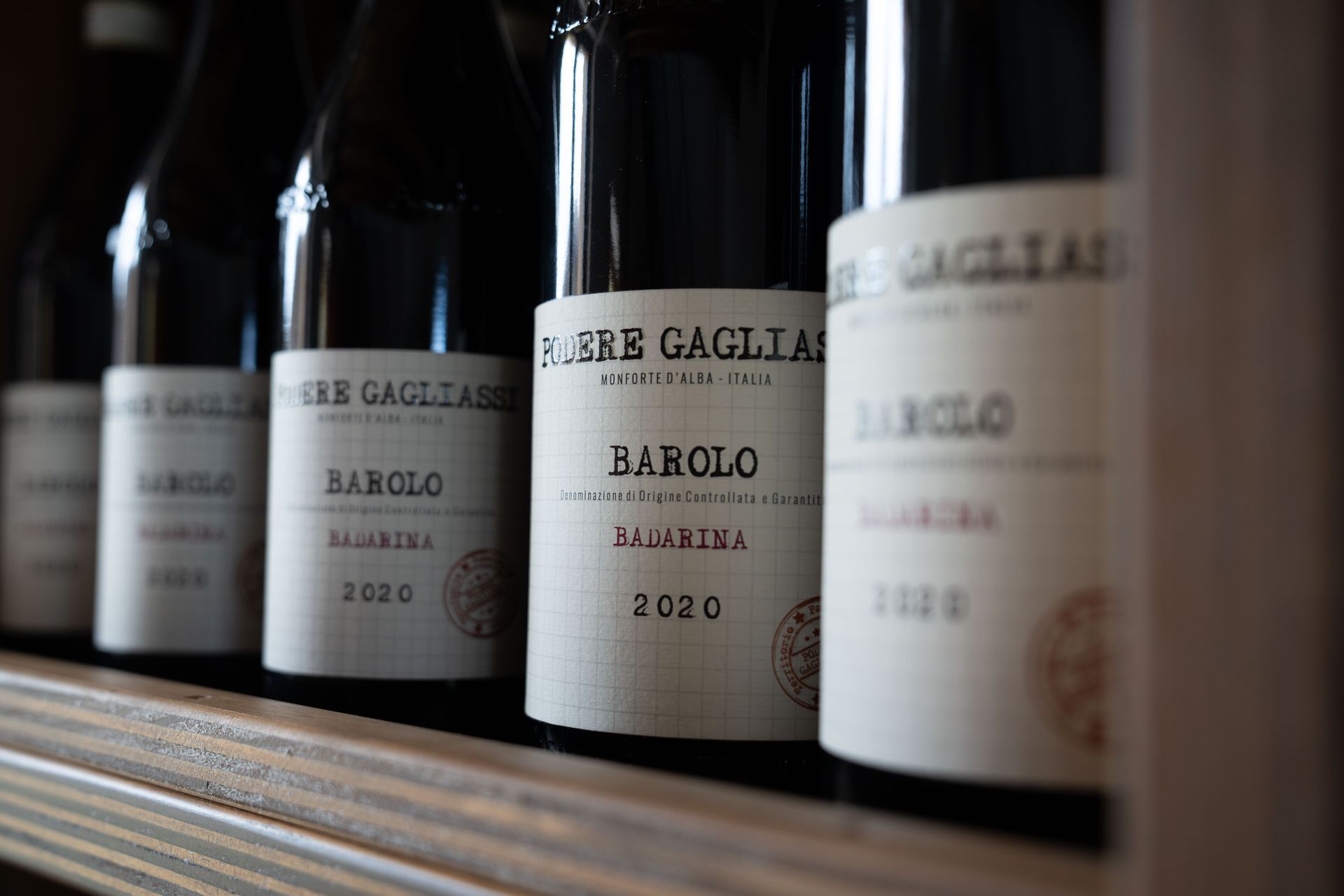
Classic Barolo: The Balance of the Appellation
The Barolo Classico represents the broadest and most traditional expression of the appellation.
The grapes may come from across the entire Barolo DOCG area, allowing the producer to craft a wine that is balanced, harmonious, and truly representative of the territory as a whole.
Historically, this was the most common style of Barolo: blending fruit from different vineyard parcels made it possible to create complete wines in which structure, elegance, acidity, and aromatic complexity naturally complemented one another.
For aging, we use 550-liter French oak casks for approximately 20 months.
The choice of large-format oak is intentional: larger casks allow the wine to evolve more slowly and gently, preserving the distinctive character of both the Nebbiolo grape and the terroir.
In a large cask, the ratio of wine to wood is lower than in a 225-liter barrique. This means:
- Less toasted and vanilla-driven notes
- Greater aromatic purity
- More elegant and integrated tannins
- A clearer expression of the terroir
The result is a
harmonious, refined, and authentic Barolo, where the oak supports the wine's evolution without ever overshadowing it.
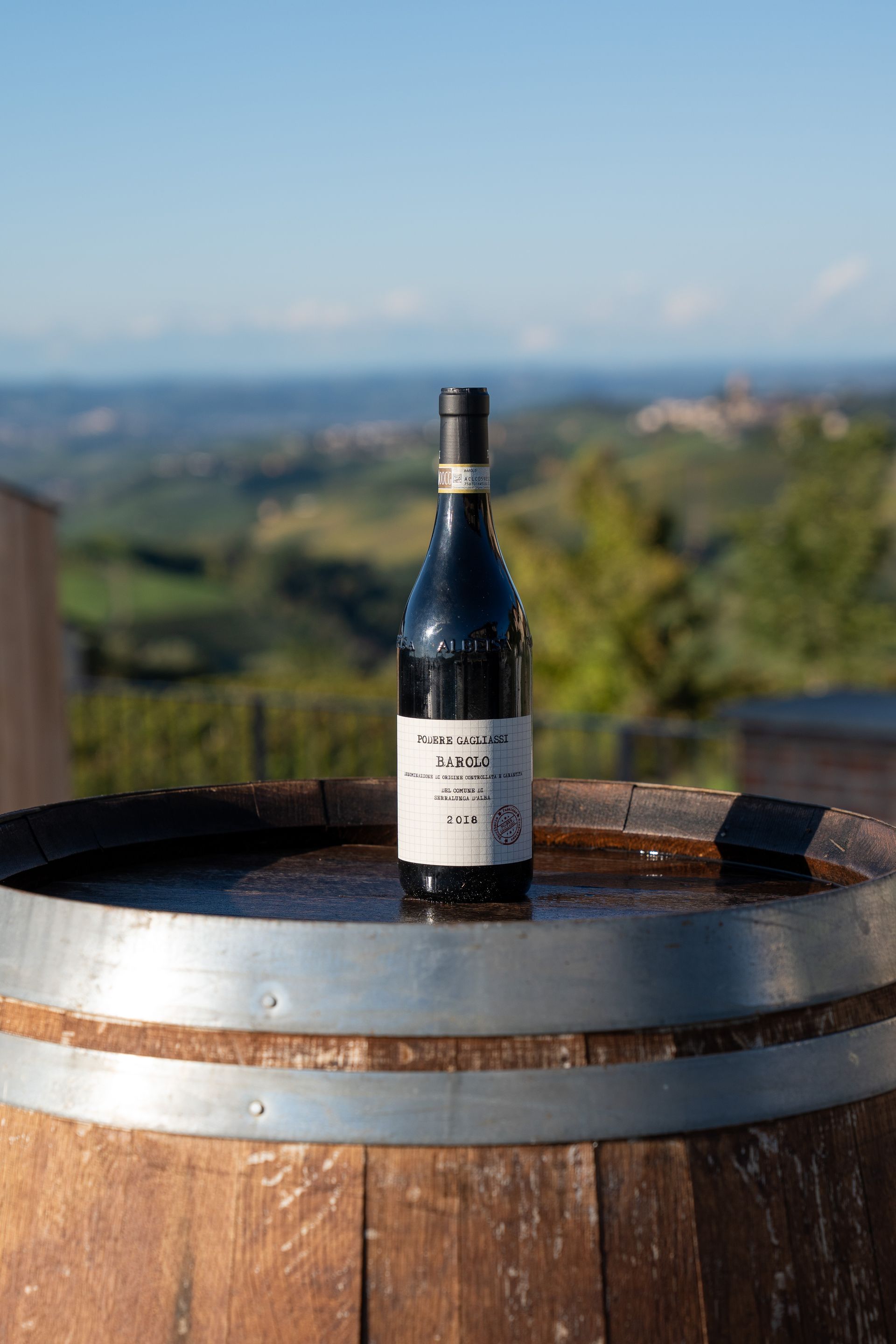
Barolo from the Commune of Serralunga d'Alba: The Strength of the Territory
Over time, producers began to recognize and highlight the distinctive characteristics of the individual communes within the Barolo appellation.
This gave rise to the concept of
Barolo Comunale: a Barolo made exclusively from grapes grown within a
single commune.
Ogni comune del Barolo possiede infatti caratteristiche geologiche e climatiche differenti:
La Morra is known for its elegance and aromatic finesse.
Monforte contributes structure and depth.
Castiglione Falletto combines balance and complexity.
Serralunga d'Alba expresses power, tannin structure, and longevity.
Our Barolo from the Commune of Serralunga d'Alba, Podere Gagliassi, is born from the union of two crus: Badarina and Sorano.
The grapes used come from parcels located along the outer edges of the vineyards. For this reason, we are not able to obtain organic certification for this wine: the proximity to neighbouring plots that are not certified does not allow full compliance with the parameters required by the organic production standards.
The Badarina cru and the other Podere Gagliassi wines, on the other hand, are certified organic.
For this Barolo as well, we choose an aging period of approximately 20 months in 550-liter French oak casks.
The large-format oak allows us to preserve the integrity of Serralunga d'Alba’s personality: a territory renowned for producing Barolos that are deep, austere, and long-lived.
In the glass, the following notes emerge:
- A firm structure
- Firm, decisive tannins
- Intense minerality
- A long, vertical finish
This is a Barolo that expresses all the power and classic character of
Serralunga, while maintaining
elegance and precision.
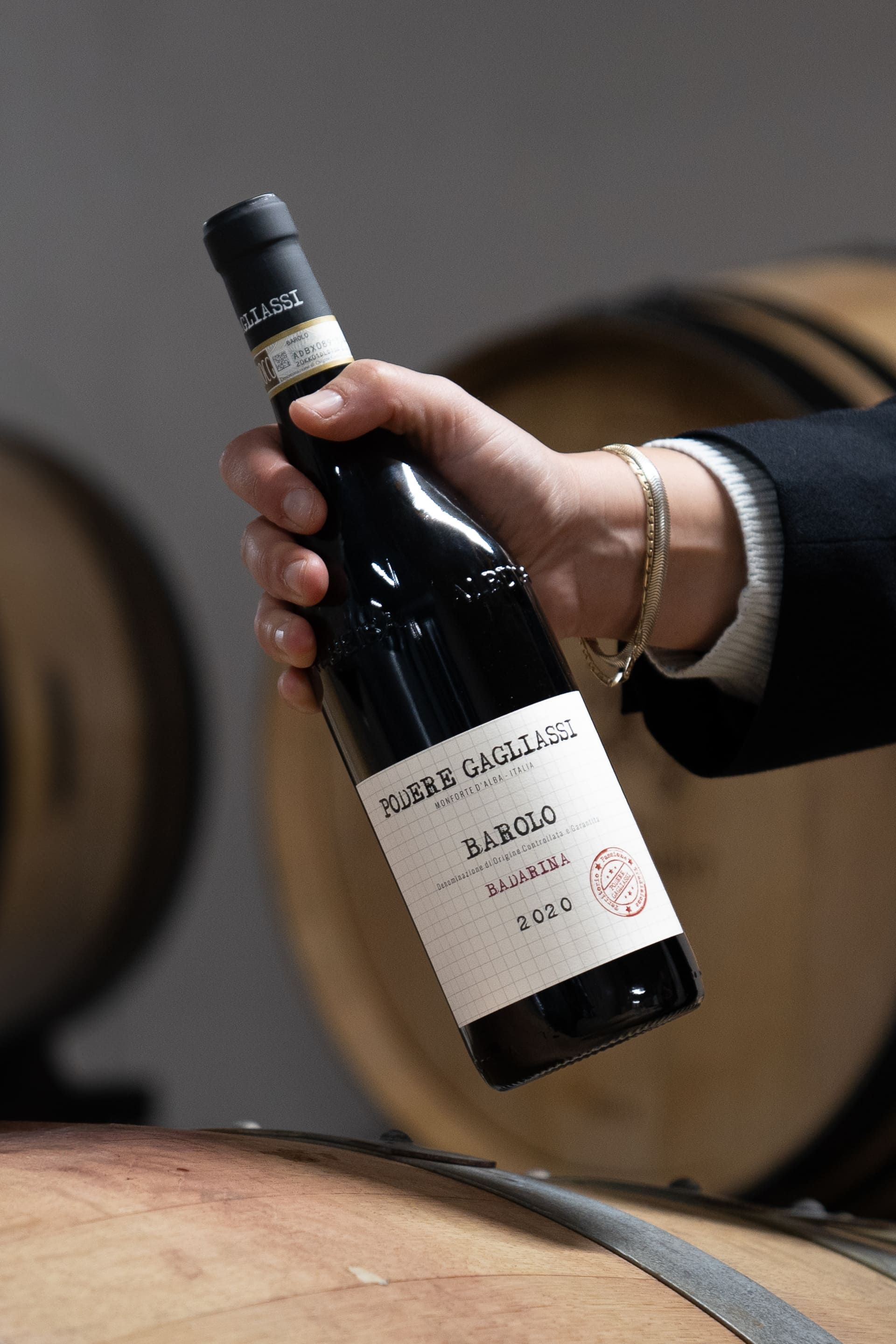
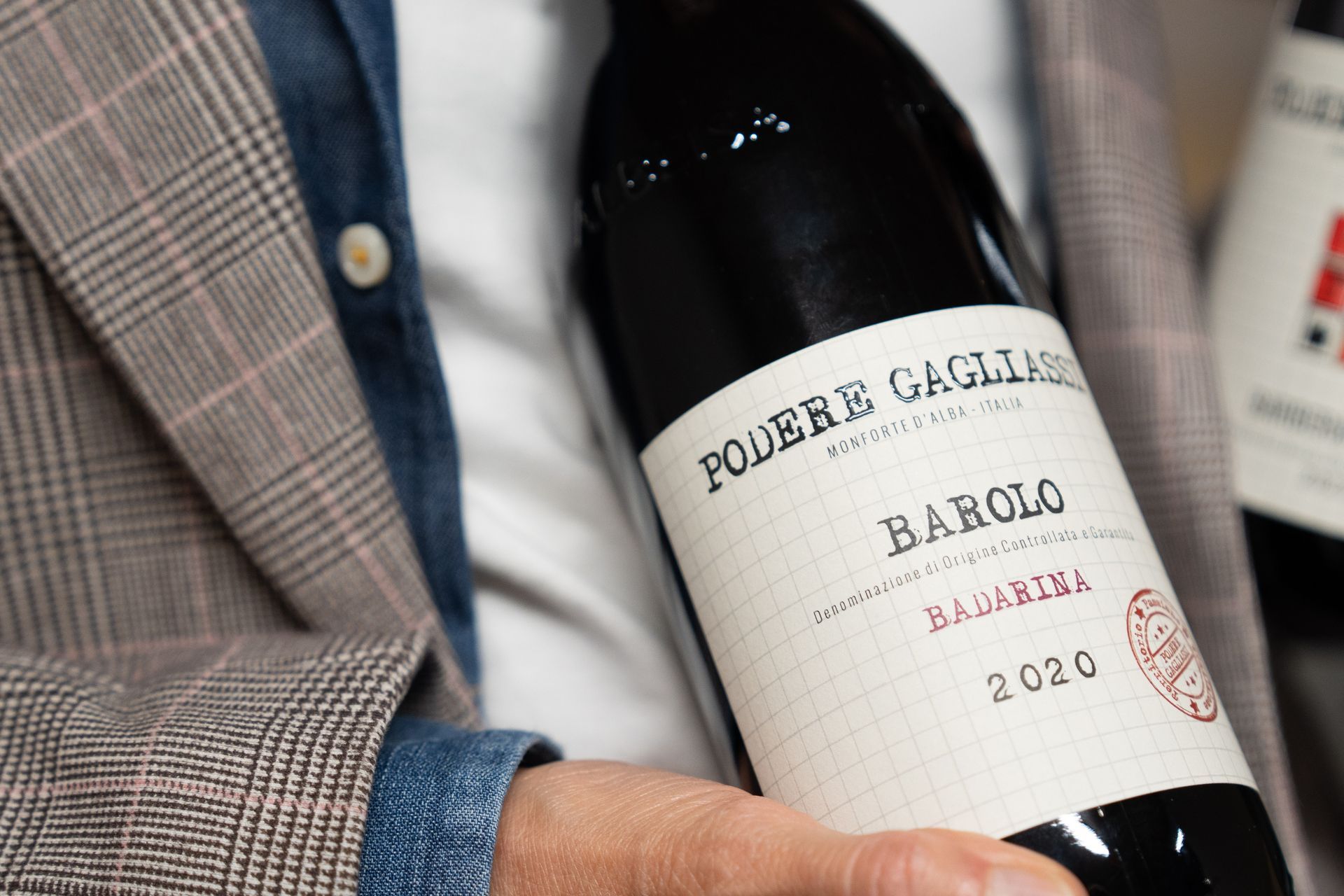
Barolo Cru Badarina: The Ultimate Expression of Terroir
The most distinctive level of Barolo is the Cru.
The term cru refers to a single historic vineyard, defined by a unique microclimate, exposure, and soil composition. Here, the wine no longer speaks simply of a commune, but of a precise parcel of land.
Our Barolo Cru Badarina, Podere Gagliassi, comes from one of the most important terroirs of Serralunga d'Alba, in an outstanding location bordering two iconic vineyards such as Vigna Francia and Vigna Arione.
Badarina is a cru capable of producing Barolo of remarkable personality.
Its soils, rich in compact clays and calcareous components, give rise to wines of great concentration, structure, and tannic depth.
Here, Nebbiolo reaches one of its most powerful expressions:
- Intense, vertical tannins
- Full-bodied structure
- Strong mineral tension
- lunghissima capacità di invecchiamento
To enhance this structure, we choose a different aging approach compared to the other Barolos in the winery: the Cru Badarina matures for approximately 30 months in 225-liter French barriques.
The smaller barrique creates a greater contact between wine and wood, promoting:
- Greater micro-oxygenation
- Broader, more enveloping structure
- Finer, denser tannins
- Enhanced aromatic complexity
- Deeper spicy and balsamic notes
On a powerful wine such as Badarina, the barrique does not mask the terroir, but rather helps to tame and integrate the extraordinary tannic strength of the vineyar.
The result is an intense, profound, and monumental Barolo, capable of evolving over decades.
Unlike the Barolo Comunale, the Cru Badarina is
certified organic, as are the other wines of Podere Gagliassi.
“Is Cru Barolo always better than Classic Barolo?”
Not necessarily. The difference is not about absolute quality, but about the level of territorial expression and the style of the wine.
What is the difference between large oak casks and barriques?
Large oak casks better preserve elegance and territorial identity, while barriques add structure, aromatic complexity, and more intense micro-oxygenation.
Why is Barolo from Serralunga d'Alba considered more powerful?
The clay- and limestone-rich soils of Serralunga d'Alba give the wines greater structure, firmer tannins, and enhanced aging potential.
What does “Barolo Comunale” mean?
A Barolo Comunale is produced exclusively from grapes grown within a single municipality of the Barolo region, such as Serralunga d'Alba.
What is the difference between Barolo Classico and Barolo Cru?
Barolo Classico is made from a blend of grapes sourced from different areas within the appellation, while Barolo Cru comes from a single historic vineyard with unique characteristics
Condividi articolo
Potrebbe interessarti anche: